What to Do After Your Work Truck Gets Broken Into
It's 6 AM, you're loading up for the day, and your truck window is shattered. Here's what to do next — step by step.
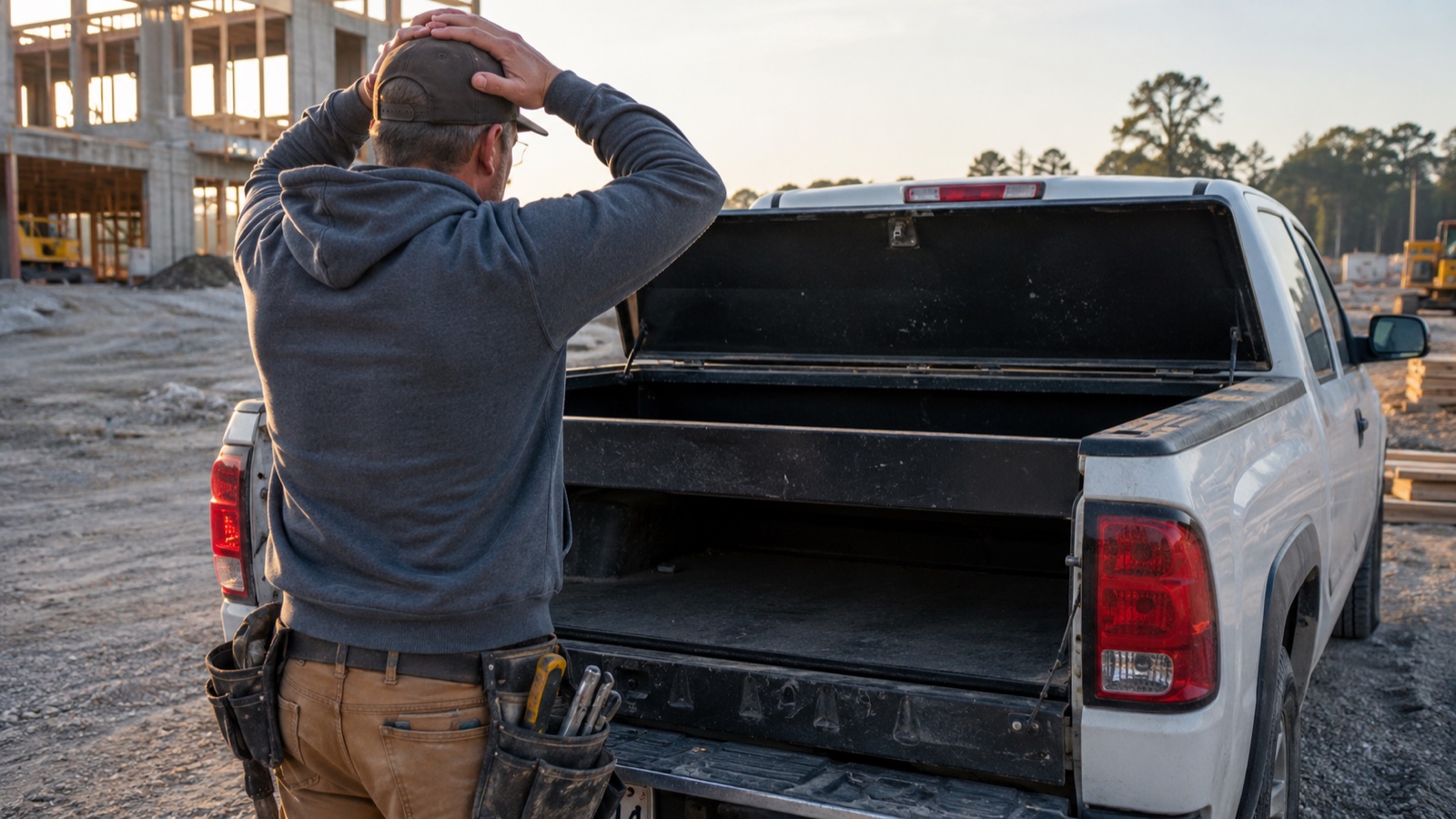
You walk up to your truck and something's wrong. The window is smashed. The lock is punched. Your toolbox lid is pried open. Half your tools are gone.
Your stomach drops. Your head starts racing through what was in there. You feel sick.
Before you do anything else, take a breath. You're about to navigate insurance claims, police reports, and a potentially expensive replacement process. The next few hours matter, and what you do right now will determine whether you get paid back for what you lost or whether you eat the cost.
Here's exactly what to do, in order.
Step 1: Don't touch anything
Your first instinct is going to be to open the door, check what's missing, and start cleaning up. Don't. Not yet.
The scene as it exists right now is evidence. Fingerprints on the door handle, tool marks on the lock, the pattern of broken glass — all of this matters to police. The moment you start moving things around, you contaminate the scene.
Stand back. Look. Take it in. But don't climb inside and start rummaging.
Step 2: Call the police
Call your local police non-emergency line and report the break-in. In some cities, they'll send an officer to the scene. In others, they'll take the report over the phone or direct you to file online.
Either way, you need a police report number. This is not optional. Your insurance company will require it. Without a police report, most insurers won't process a theft claim at all.
When you file the report, give them everything you can: when you last saw the truck intact, where it was parked, what you think is missing (even a rough list), and any security cameras in the area. If there are businesses nearby with exterior cameras, mention that to the officer — it could be the difference between catching someone and not.
Get the report number and the officer's name. Write them down. You'll need both.
Step 3: Document the scene with photos
Now you can approach the truck. Before you touch anything, photograph everything.
Take wide shots of the truck from multiple angles showing the damage. Take close-ups of the broken window, the pried lock, the forced toolbox. Photograph the interior — the empty spaces where tools were, any damage to the dashboard or console, anything the thief left behind.
Photograph the ground around the truck. Sometimes thieves drop things, leave footprints, or discard packaging from your tools.
Take more photos than you think you need. You cannot over-document a theft scene. Your insurance adjuster will want to see the method of entry, the extent of damage, and the condition of the vehicle. Your phone timestamps every photo automatically, which creates a time-stamped record of the scene.
Step 4: Make your list
This is the part that separates contractors who get paid from contractors who don't.
You need a complete list of everything that was stolen. And you need it with as much detail as possible: brand, model, serial number, approximate purchase date, and replacement value.
If you already have a tool inventory — a spreadsheet, an app, anything — now is when it saves you. Pull it up, compare what's listed against what's still in the truck, and identify every missing item.
If you don't have an inventory, you're going to be working from memory. Sit down somewhere quiet and start writing. Go compartment by compartment through your truck. What was in the main toolbox? What was behind the seat? What was in the side boxes? Don't rush this. Take an hour if you need to.
Common items contractors forget to list: charging stations, batteries (these are expensive), cases and bags, specialty blades and bits, PPE, extension cords, and adapters. These add up fast.
This is exactly the situation where having a pre-existing inventory makes an enormous difference. Contractors who use an app like ToolTracked to photograph and catalog their tools before a theft happens can generate a complete stolen-items list in minutes, with photos and serial numbers already attached. Contractors without an inventory spend days reconstructing their list from memory, Amazon order history, and old receipts — and they always miss things.
Step 5: Contact your insurance company
Call your insurer as soon as you have your police report number and at least a preliminary list of stolen items. The sooner you open the claim, the sooner the process moves.
You'll need to know which policy covers your tools. For many contractors, it's an inland marine policy or a tools and equipment floater. Your standard auto policy covers damage to the truck itself (broken window, damaged locks) but usually does not cover the tools inside. Some contractors carry a business property policy that includes tools. Others have a separate rider.
If you don't know what coverage you have, call your agent. This is literally what they're for.
When you file the claim, provide:
- Police report number
- Date and location of the theft
- Photos of the damage
- Your list of stolen items with values
- Any receipts or proof of purchase you have
Pro tip: If you have a tool tracking app that generates PDF reports, export one and send it directly to your adjuster. A formatted report with photos, serial numbers, and values is exactly what they want. It speeds up the process and signals that you're organized and credible.
Step 6: File supplemental claims
Here's something most contractors don't know: you can add items to your claim after you file it.
Over the next few days, you're going to remember tools you forgot. You'll reach for something on a job and realize it's gone. You'll get to a specific task and discover the specialty tool you needed was in that truck.
Every time this happens, call your adjuster and add the item to the claim. Most insurance companies allow supplemental claims for 30 to 90 days after the initial filing. Keep a running list on your phone so you don't forget.
This is normal and adjusters expect it. Don't feel like you're being a nuisance. They know that reconstructing a stolen inventory from memory takes time.
The emotional part nobody talks about
A truck break-in isn't just a financial loss. It feels personal.
Those are your tools. You bought them with money you earned. Some of them you've had for years. You know the weight of your favorite drill, the tape on the handle of your go-to hammer. You organized that truck exactly the way you wanted it.
Someone violated that. They broke into your workspace, rifled through your things, and took what you built. It's normal to feel angry, violated, anxious, and frustrated all at once.
It's also normal to feel paranoid afterward. You'll check your truck more often. You'll wake up at night wondering if you locked it. That fades with time, but it's real.
Give yourself space to be upset. Then channel it into making sure this doesn't happen again.
Prevention: making the next time harder
You can't make your truck theft-proof. But you can make it a harder target.
Park smart. Well-lit areas, close to buildings, visible to cameras. Back your truck against a wall so the tailgate and rear toolboxes can't be accessed. If you have a garage, use it.
Lock everything. This sounds obvious, but a surprising number of truck break-ins involve unlocked vehicles. Lock the cab. Lock the toolboxes. Every time.
Upgrade your toolbox locks. The factory locks on most truck toolboxes are garbage. They can be popped with a flathead screwdriver. Aftermarket puck locks, crossbar locks, or bolt-cutter-resistant padlocks are worth the investment.
Consider GPS trackers. Small Bluetooth trackers like Apple AirTags placed inside toolboxes won't prevent theft, but they can help police recover your tools. Some contractors have gotten their entire truck back within hours because of a $30 tracker buried under a tool tray.
Bolt down what you can. Compressors, generators, and large power tools can be bolted or cabled to the truck bed. It won't stop a determined thief with time, but it slows down the smash-and-grab.
Keep an updated inventory. This is the single most impactful thing you can do for recovery and insurance purposes. An up-to-date tool inventory with photos and serial numbers turns a chaotic, emotional insurance claim into a straightforward process. ToolTracked lets you build and maintain that inventory with AI photo recognition, so the work takes minutes instead of hours.
The bottom line
Getting your truck broken into is terrible. There's no sugarcoating it. But the contractors who recover fastest are the ones who respond methodically: document the scene, file the report, list what's missing, and work the insurance process.
And the contractors who come out best financially are the ones who had their inventory documented before the theft ever happened. If that's not you yet, make it you today.
ToolTracked helps contractors build a complete tool inventory with AI photo recognition and generate insurance-ready PDF reports — so if the worst happens, you're ready. Get started at tooltracked.com.