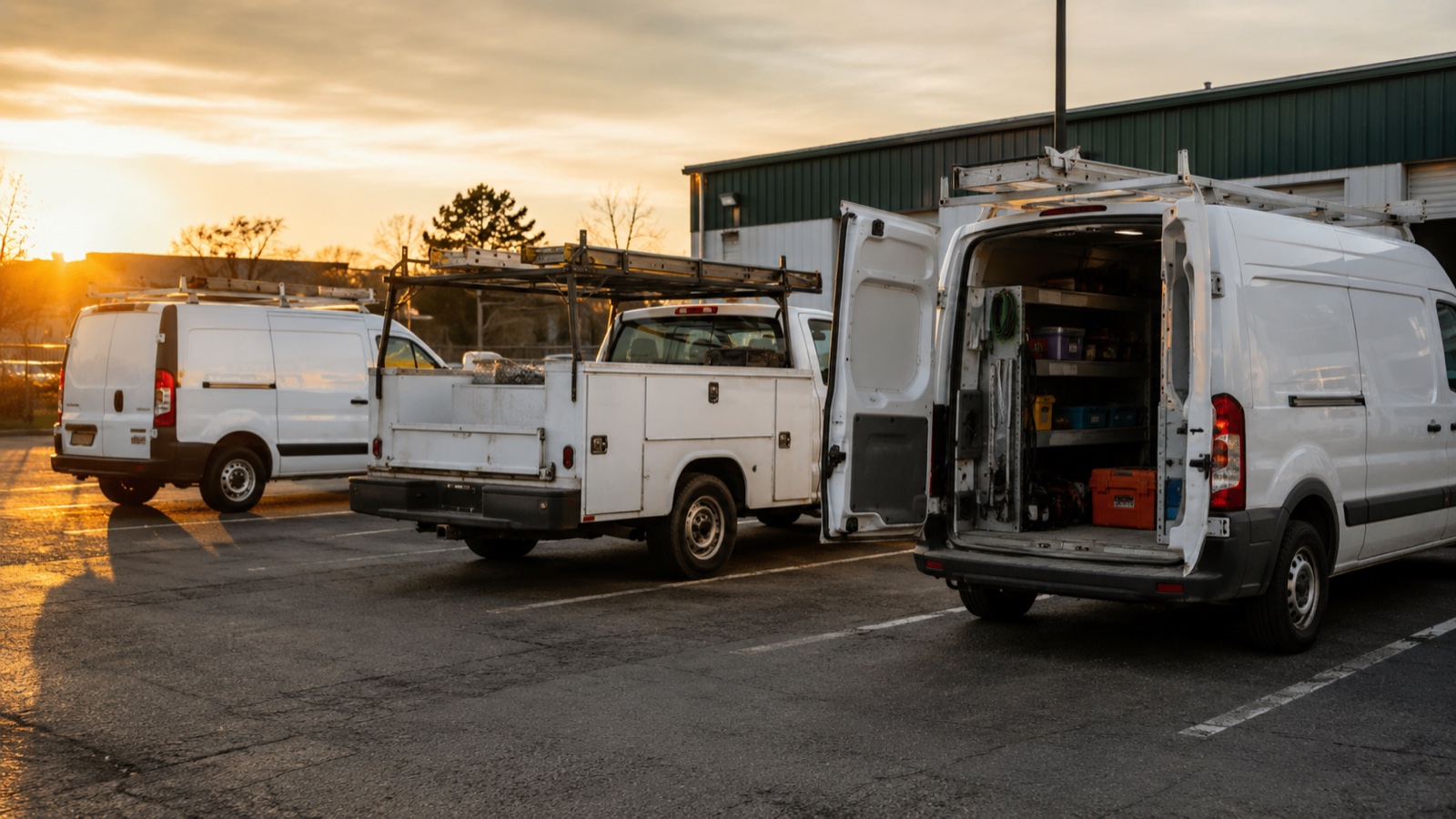
How to Track Your Work Vehicle Fleet as an Independent Contractor
You've got two trucks and a van. That's a fleet — and it needs to be tracked like one.
Most independent contractors don't think of themselves as fleet managers. You've got a work truck. Maybe a second one for your helper. Maybe a van for hauling materials. You're not running a trucking company.
But here's the thing: insurance companies, the IRS, and your own bottom line don't care what you call it. If you have multiple vehicles used for work, you have a fleet. And if you're not tracking those vehicles properly, you're leaving money on the table and exposing yourself to risk you don't need.
Why vehicle tracking matters more than you think
There are three big reasons to keep organized records on your work vehicles, and none of them are optional.
Insurance. Your commercial auto policy needs accurate information about every vehicle you're using for work. If you file a claim and the vehicle details don't match what's on your policy — wrong VIN, wrong driver, wrong usage classification — your claim can get delayed or denied. It happens more often than people realize.
Depreciation and taxes. Work vehicles are depreciable assets. If you're not tracking purchase dates, mileage, and usage, you're probably not maximizing your deductions. Your accountant can only work with the information you give them, and "I think I bought the truck in 2022" isn't very helpful come tax time.
Maintenance scheduling. A missed oil change is annoying. A missed brake service is dangerous. A blown engine because nobody tracked the mileage intervals is a $10,000 lesson you only need to learn once. When you have multiple vehicles, maintenance falls through the cracks unless you have a system.
What to document for each vehicle
Every work vehicle in your operation should have a record that includes:
Vehicle identification:
- Year, make, and model
- VIN (Vehicle Identification Number)
- License plate number and state
- Color and any identifying features (company logos, rack systems, toolbox configurations)
Financial records:
- Purchase date and price
- Current estimated value
- Loan or lease details if applicable
- Monthly payment amount
Insurance information:
- Policy number and carrier
- Coverage type (liability, comprehensive, collision)
- Premium amount
- Policy expiration date
- Named drivers
Operational data:
- Current mileage (updated monthly at minimum)
- Primary driver
- Typical use (hauling, service calls, commuting to job sites)
- Maintenance history with dates and costs
Photos. At least four exterior shots (front, back, both sides), plus the odometer, VIN plate, and any installed equipment like ladder racks, toolboxes, or compressor mounts. Update these photos annually or after any modifications.
This sounds like a lot, but most of it only needs to be recorded once. After the initial setup, you're just updating mileage and logging maintenance.
Personal vehicles used for work vs. dedicated work trucks
This is where a lot of contractors get tripped up.
If you drive your personal truck to job sites, it exists in a gray area. Your personal auto insurance may or may not cover you while you're using it for work. Many personal policies have exclusions for commercial use, and if your insurer finds out you've been hauling tools and materials to job sites, they can deny a claim or cancel your policy.
The safest move is to either get a commercial auto policy for any vehicle used regularly for work, or get a rider on your personal policy that covers business use. Either way, you need to document the vehicle and its work usage.
Dedicated work vehicles are simpler from an insurance standpoint — they go on your commercial policy, period. But they need more rigorous tracking because they're business assets with depreciation schedules, and every dollar of fuel, maintenance, and insurance is a business expense.
The key difference for tracking purposes: personal vehicles used for work need mileage logs that separate business and personal miles. Dedicated work vehicles are assumed to be 100% business use (though the IRS may ask you to prove it). Either way, you need records.
Fleet insurance for small contractors
Once you have two or more vehicles on a commercial auto policy, you should be asking your agent about fleet pricing. Most carriers offer fleet discounts starting at just two or three vehicles, and the savings can be significant — sometimes 10-15% off what you'd pay for individual policies.
Here's what fleet insurance typically covers:
- Liability for all vehicles under one policy
- Physical damage (comprehensive and collision)
- Hired and non-owned auto coverage (for rental vehicles or employee-owned vehicles used for work)
- Cargo coverage for tools and materials in transit
The main advantage beyond cost savings is simplicity. One policy, one renewal date, one agent who understands your entire operation. When you have vehicles on separate policies with different carriers, something always slips through the cracks.
A few things to watch for with fleet policies:
Driver documentation. Fleet policies require a list of all authorized drivers with their license numbers and driving records. When you hire a new helper who drives one of your trucks, you need to add them to the policy. This is where having organized vehicle records pays off — your agent will ask for vehicle details and you can hand them over in minutes instead of scrambling.
Vehicle additions and removals. When you buy a new truck or sell an old one, the policy needs to be updated. If you total a vehicle in an accident and it's not properly documented on your policy, the claims process gets messy.
Usage classifications. Make sure each vehicle is classified correctly. A truck used for hauling heavy equipment to job sites has a different risk profile than a van used for service calls. Misclassification can void coverage.
How to actually keep this organized
The worst way to track a fleet is in your head. The second worst way is in a pile of folders in your truck's glove compartment.
You need a system where all your vehicle information lives in one place, is accessible from your phone (because you're never at your desk when you need it), and includes photos. When your insurance agent calls and says "what's the VIN on that white Ford?" you should be able to pull it up in thirty seconds.
ToolTracked lets you catalog vehicles alongside your tools and equipment, with photos, documents, and all the details your insurance company needs. When it's time to update your fleet policy or file a claim, everything is already organized and exportable.
Start with what you have
If you've been running vehicles without proper tracking, don't let the backlog paralyze you. Start with the vehicle you're sitting in right now. Pull up the registration, snap a photo of the VIN plate and odometer, and record the basics. Do the next vehicle tomorrow. Within a week, you'll have a complete fleet record.
The contractors who keep clean vehicle records aren't the ones with the most time. They're the ones who got burned once — a denied claim, a missed tax deduction, a maintenance failure that cost thousands — and decided it wouldn't happen again.
Don't wait for the lesson. Build the record now.
ToolTracked helps independent contractors track vehicles, tools, and equipment in one place — with photo documentation and insurance-ready PDF reports. Start your fleet inventory at tooltracked.com.