Tool Theft Statistics Every Contractor Should Know (2026)
The numbers are worse than you think. Here's what the data actually says about construction tool theft — and what it means for you.
You probably know someone who's had tools stolen. Maybe it's happened to you. What most contractors don't realize is how common it is, how much it costs the industry, and how unlikely you are to get your tools back.
Here are the numbers.
The big picture
Construction site theft costs the industry between $300 million and $1 billion per year in the United States alone. That range is wide because most thefts go unreported — many contractors absorb the loss and move on, especially for thefts under a few thousand dollars.
At least 30 pieces of construction equipment are stolen every day in the U.S. That includes everything from heavy machinery to the power tools in the back of your truck.
The National Equipment Register (NER) and the National Insurance Crime Bureau (NICB) have tracked construction equipment theft for years. Their data consistently shows that theft rates have remained stubbornly high despite advances in GPS tracking and site security. The reason is simple: most stolen items aren't GPS-tracked heavy equipment. They're power tools and hand tools that are easy to grab and nearly impossible to trace.
Recovery rates are terrible
This is the number that should worry you: recovery rates for stolen tools and small equipment hover around 7% for single-item thefts. That means if someone steals your impact driver, your drill, or your laser level, there's a 93% chance you'll never see it again.
Larger equipment fares somewhat better — around 20–25% of stolen heavy equipment is eventually recovered, often because it has GPS tracking or is distinctive enough to be identified. But for the tools most independent contractors rely on daily, recovery is the exception, not the rule.
Why so low? Power tools are easy to sell. They're sold at flea markets, on Facebook Marketplace, on Craigslist, and through pawn shops. There's no registration system for tools like there is for vehicles. Once a tool leaves your possession, it effectively disappears.
When and where theft happens
Theft patterns are predictable, which is both frustrating and useful.
Timing: Most construction site thefts happen between Friday evening and Monday morning, when sites are unattended. Overnight thefts during the workweek are the second most common window. Tool theft from trucks spikes overnight, particularly in residential areas and hotel parking lots.
Seasonality: Theft increases during warmer months (May through September) when construction activity peaks and there are more tools in the field. The holiday season also sees a spike, likely driven by people looking for things to sell.
Locations: Work trucks and vans are the most common target for independent contractors. An unlocked truck in a driveway or parking lot is the easiest score a thief can find. Job sites without fencing or security are next. Even locked gang boxes get broken into — a battery-powered angle grinder cuts through a padlock in seconds.
Who gets hit
Industry surveys suggest that around 70% of contractors have experienced tool theft at some point in their career. For contractors who've been in the trade for 10+ years, the number is even higher.
Solo operators and small crews are disproportionately affected because they typically have less site security, store tools in vehicles rather than secured facilities, and may not carry adequate insurance. A large construction company can absorb a $10,000 theft. For an independent plumber, that same loss might represent a month's income in tools.
The financial impact beyond the tools
The sticker price of the stolen tools is only part of the cost. When tools are stolen, the ripple effects include:
Lost income. If your tools are stolen on a Sunday night, you might not be able to work on Monday. Depending on what was taken and how fast you can replace it, you could lose days of billable work.
Replacement hassle. Even if insurance covers the tools, you have to file a claim, wait for processing, shop for replacements, and set everything up again. That takes time — time you're not earning.
Insurance premium increases. Filing a theft claim often raises your premiums. Some contractors avoid filing small claims specifically to keep their rates down, which means they absorb the full loss.
Project delays. Theft adds an estimated 1–5% to overall project costs when you factor in downtime, replacement logistics, and schedule disruptions.
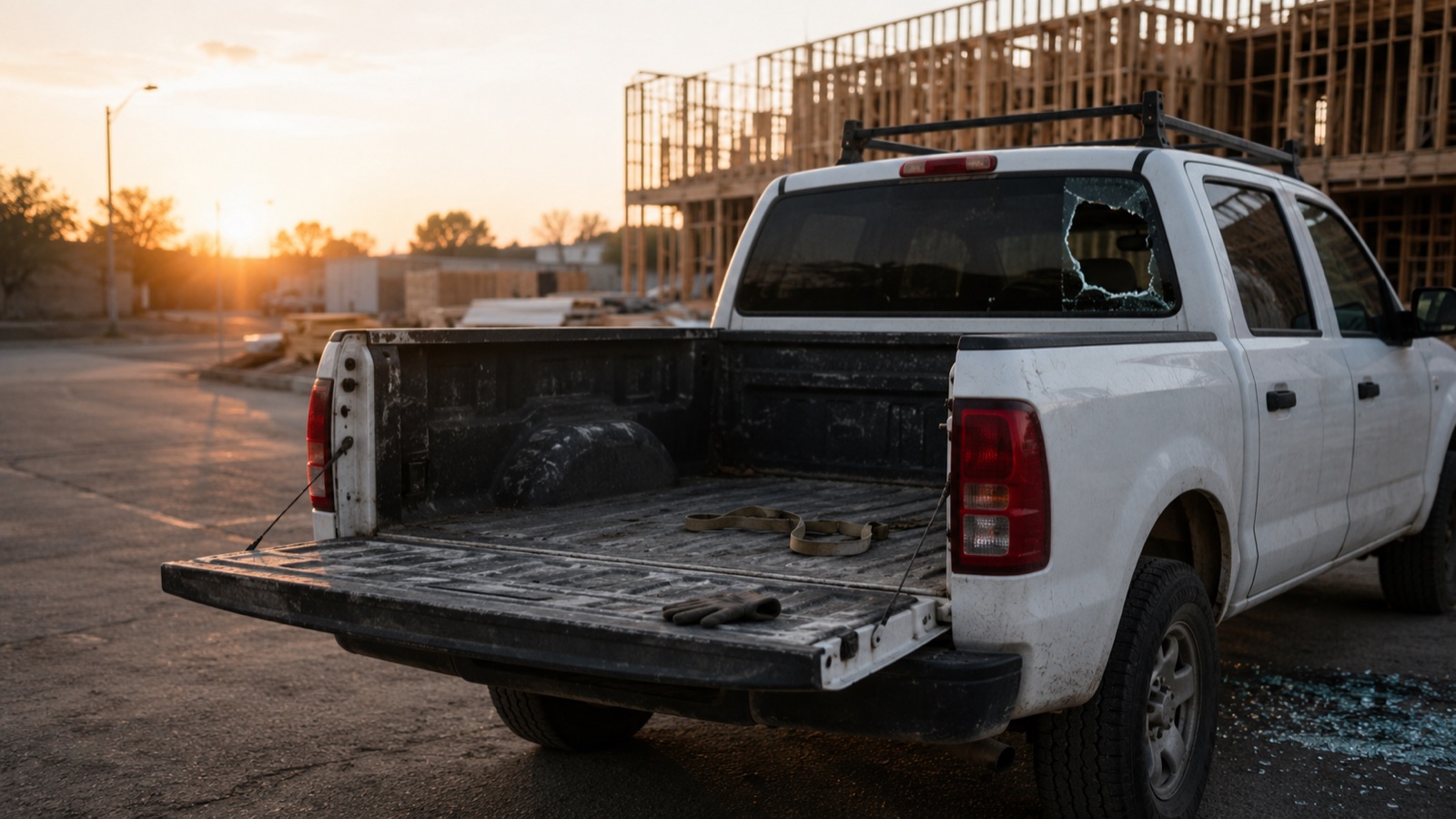
Emotional cost. This one doesn't show up in the data, but anyone who's been hit knows it. Walking up to an empty truck bed is gut-wrenching. Many contractors describe it as a violation — these are the tools they built their livelihood with.
What actually helps
The data points to a few things that meaningfully reduce theft risk or minimize damage when it happens.
Lock your truck. It sounds obvious, but a significant percentage of tool thefts involve unlocked vehicles. A lock won't stop a determined thief, but it eliminates opportunistic theft.
Use a quality toolbox or vault. Bolt-down truck vaults and heavy-gauge gang boxes take time to break into. Time is the thief's enemy — most want to grab and go in under 60 seconds.
Park strategically. Back your truck against a wall so the tailgate can't be opened. Park under lights. Park in view of cameras. When staying at a hotel on a job, park where you can see the truck from your room.
Record serial numbers. This is the single most effective thing you can do for recovery and insurance claims. A tool with a recorded serial number can be identified if it shows up at a pawn shop (many states require pawn shops to check serial numbers against theft databases). Without a serial number, your stolen DeWalt looks like every other DeWalt.
Maintain a complete inventory. An itemized list with photos, serial numbers, and values is what turns a denied insurance claim into an approved one. Build it before you need it.
Consider GPS trackers. Small Bluetooth trackers like AirTags can be placed in tool bags or boxes. They won't prevent theft, but they can help you locate stolen tools quickly — and the faster you act, the better your chances of recovery.
The math that matters
Here's the calculation every contractor should do:
Take your total tool replacement value. Multiply it by the probability of experiencing theft at some point in your career (~70%). Factor in the low recovery rate (~7% for individual tools). That gives you your expected unrecovered loss.
For a contractor with $15,000 in tools: $15,000 × 0.70 = $10,500 expected theft exposure. With only 7% recovery: $10,500 × 0.93 = $9,765 expected permanent loss over a career.
That's roughly $10,000 in tools you'll statistically lose and never get back unless you have proper insurance and documentation to support a claim.
Carrying the right insurance and maintaining a current tool inventory are the two things that turn a $10,000 loss into an inconvenience instead of a crisis.
ToolTracked helps you build a complete tool inventory in minutes, not hours. Scan your tools with the AI camera, and it captures the brand, model, and replacement value automatically. Generate a PDF report for your insurance company with one tap. Free for up to 20 tools. Get ToolTracked →