How to Inventory 500+ Tools Without Losing Your Mind
You've been putting this off for years. Here's how to finally get it done without burning a whole weekend — or your patience.
You know you need to do it. Your insurance agent has been asking. Your accountant would love a depreciation schedule. You've bought duplicates of things you already own because you couldn't find the first one. Somewhere in the back of your mind, there's a nagging voice that says "you should really make a list of all this stuff."
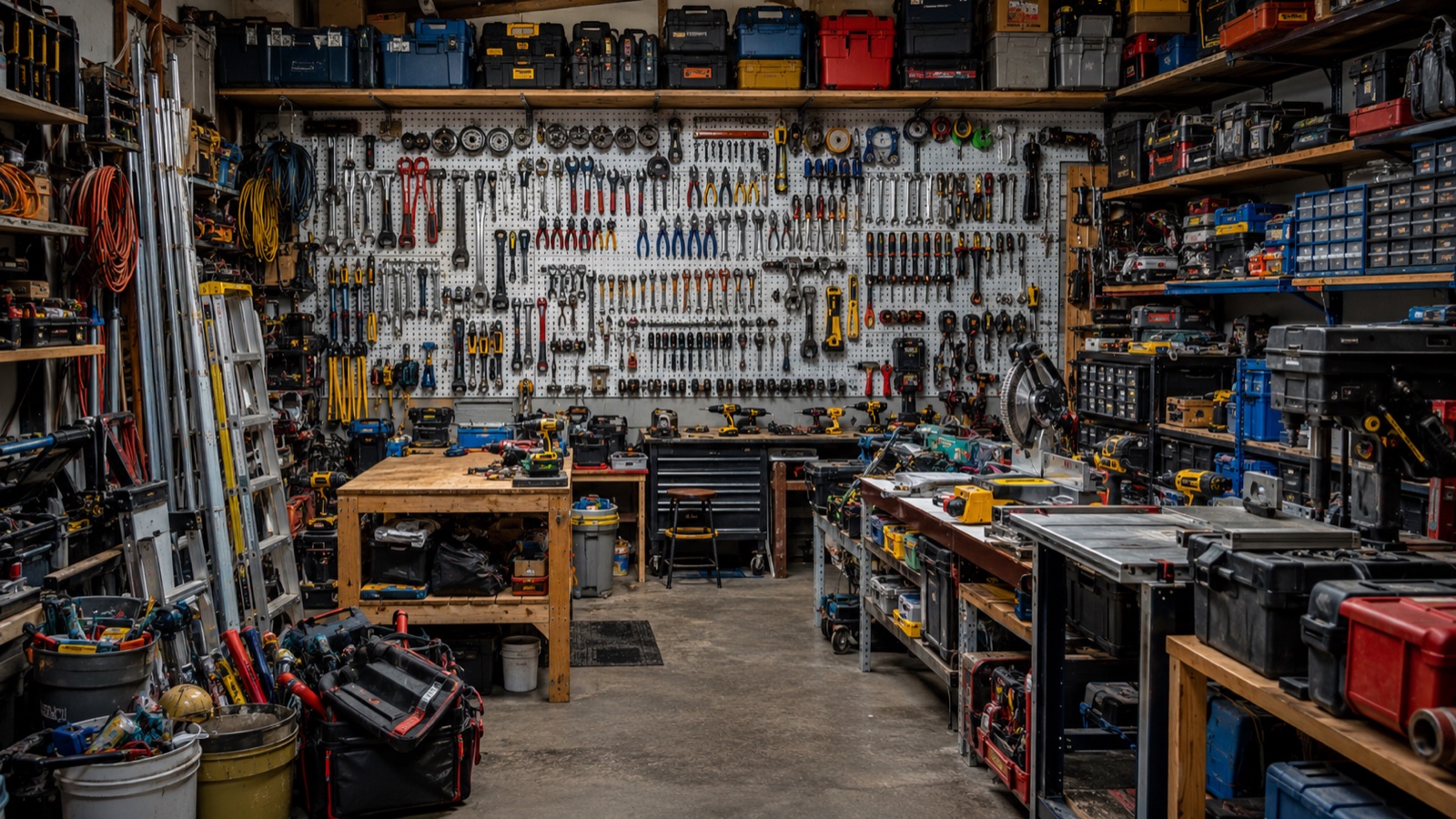
And then you look at your shop. Your truck. Your trailer. The job site. The other job site. The storage unit you forgot you were renting.
Five hundred tools. Maybe more. You don't even know where to start.
So you don't start. You put it off another month. Another year.
This article is for the contractor who's been staring down a massive inventory and can't bring themselves to begin. I'm going to give you a strategy that works, and more importantly, I'm going to talk about why you keep avoiding it and how to get past that.
The psychological barrier is the real problem
Let's be honest about what's going on. The actual work of inventorying a tool isn't hard. Pick it up, note what it is, write down the brand and model, snap a photo, set it down, move on. Thirty seconds per tool, maybe less.
But the thought of doing that 500 times? That's what stops people. It's not the difficulty — it's the volume. Your brain looks at the entire project, calculates how long it'll take, and says "absolutely not."
This is the same reason people avoid cleaning out a garage or doing their taxes. The task isn't hard. It's just big. And big tasks trigger avoidance.
The fix is simple, and it's the oldest productivity trick in the book: don't do the whole thing. Do a piece of it.
You're not going to inventory 500 tools. You're going to inventory one zone. That's it. One zone, one session, done for the day. Tomorrow you'll do another zone. By the end of the week, you'll be finished, and no single session will have taken more than an hour.
Break it into zones
Your tools aren't all in one place, and that's actually an advantage. Each location is a natural zone with a natural boundary. Here's how most contractors can divide it up:
Zone 1: The primary work truck. This is where your daily-use tools live. It's probably the most organized area you have, and it's a finite space. Start here because it's the easiest win and it builds momentum.
Zone 2: The shop/garage. This is usually the biggest zone and the most chaotic. If your shop is large, break it into sub-zones — workbench area, wall storage, floor equipment, shelving. Don't try to do the whole shop in one session unless it's small.
Zone 3: The trailer. If you have a job trailer or equipment trailer, that's its own zone. Walk through it end to end.
Zone 4: The secondary vehicle. If you have a second truck, van, or helper's vehicle, that's another zone.
Zone 5: Active job sites. Tools currently deployed on job sites. You might need to do this one during a workday.
Zone 6: Storage/overflow. The storage unit, the corner of the basement, the shelves in the back of the shop where things go to be forgotten.
Six zones, six sessions. Even if each session takes an hour, you're done in a week with zero weekends sacrificed.
Use the 80/20 rule: expensive tools first
Here's a secret that takes the pressure off: you don't need to inventory every single item with the same level of detail.
Your top 20% of tools — by value — represent about 80% of your total equipment investment. These are your saws, your generators, your rotary lasers, your compressors, your cordless platform kits. These need full documentation: brand, model, serial number, photos, purchase info if you have it, current replacement value.
The bottom 80% — your hand tools, tape measures, levels, clamps, bits, blades — can be inventoried in batches. "Assorted hand tools, approximately 40 items, estimated replacement value $1,500" is acceptable for insurance purposes and takes thirty seconds instead of thirty minutes.
Do the expensive stuff first. If you only get through one session and then life gets busy, at least your high-value items are documented. That's where the real financial exposure is.
Use AI scanning to speed things up
Here's where modern tools earn their keep. Manually typing "Milwaukee 2804-22 M18 FUEL 1/2-inch Hammer Drill/Driver Kit" for every tool in your inventory is tedious and error-prone. You'll misspell model numbers. You'll get bored and start abbreviating. You'll skip serial numbers because they're hard to read.
ToolTracked's AI photo recognition lets you point your phone camera at a tool and have it automatically identified — brand, model, and category filled in without typing. You still confirm the details and add anything the scan misses, but it cuts the per-tool time dramatically.
Whether you use an app or not, photos are the single most important part of your inventory. A photo proves ownership in a way that a spreadsheet row never can. Take photos of every tool, with a close-up of the serial number plate. If you do nothing else, do this.
The one-zone-per-day schedule
Here's a realistic schedule for a contractor with 500+ tools across multiple locations:
Monday: Primary truck. Set a timer for 45 minutes. Start at the cab and work toward the tailgate. Every tool gets photographed and recorded. If you finish early, great. If time runs out, pick up where you left off tomorrow.
Tuesday: Shop — workbench and wall storage. Focus on the tools you can see and reach without moving things.
Wednesday: Shop — floor equipment, shelving, and the dark corners. This is where you'll find tools you forgot you owned.
Thursday: Trailer and/or secondary vehicle. These are usually smaller zones and go faster.
Friday: Active job site sweep. Walk the current site and record anything that isn't assigned to someone's truck inventory.
Saturday (optional): Storage unit or overflow areas. Skip this if everything important is already captured.
That's five hours of actual work, spread over five days, mixed into your normal routine. Nobody's heroic weekend inventory session required.
Don't aim for perfection on the first pass
Your first inventory will have gaps. You'll miss tools that were loaned out. You'll forget a drawer. You'll skip serial numbers on tools that are too dirty to read. That's fine.
A 90% complete inventory is infinitely more useful than no inventory at all. You can fill in the gaps over time. When you buy a new tool, add it. When a loaned tool comes back, add it. When you clean a tool and can finally read the serial number, update the record.
The goal of the first pass is to get the bulk of it done and establish a baseline. Perfection is the enemy of starting.
What happens when you actually finish
Contractors who complete their first full inventory consistently report the same things:
"I own way more than I thought." The total replacement value is almost always higher than expected. Most contractors are shocked to learn they're carrying $30,000-$80,000 in tools and equipment. That number matters for insurance.
"I found stuff I forgot I had." Duplicate purchases drop immediately because you can check your inventory before buying. Some contractors find they already own tools they were about to buy.
"I feel more in control." This one's harder to quantify, but it's real. Knowing what you own and where it is reduces the low-grade anxiety that comes from running a disorganized operation.
"My insurance agent was thrilled." A documented inventory with photos makes your agent's job easier, which makes your claims faster and your coverage more accurate.
The hardest part is the first ten minutes
You've read this far, which means you're at least considering doing this. Good. Here's my challenge: before you close this article, go inventory one drawer. Not your whole truck. Not your whole shop. One drawer.
Open it, photograph what's inside, write down what's there. Five minutes, tops.
That's it. That's the start. Tomorrow, do another drawer. Or a shelf. Or one side of your truck bed. The momentum builds on itself.
Five hundred tools sounds impossible until you realize it's just ten sessions of fifty tools each, and fifty tools takes less than an hour. You've spent longer watching YouTube videos about tools than it would take to inventory the tools you actually own.
Start today. One zone. One session. Go.
ToolTracked's AI photo scanning makes large inventories fast — point, shoot, and let the app identify your tools automatically. Start your inventory at tooltracked.com.