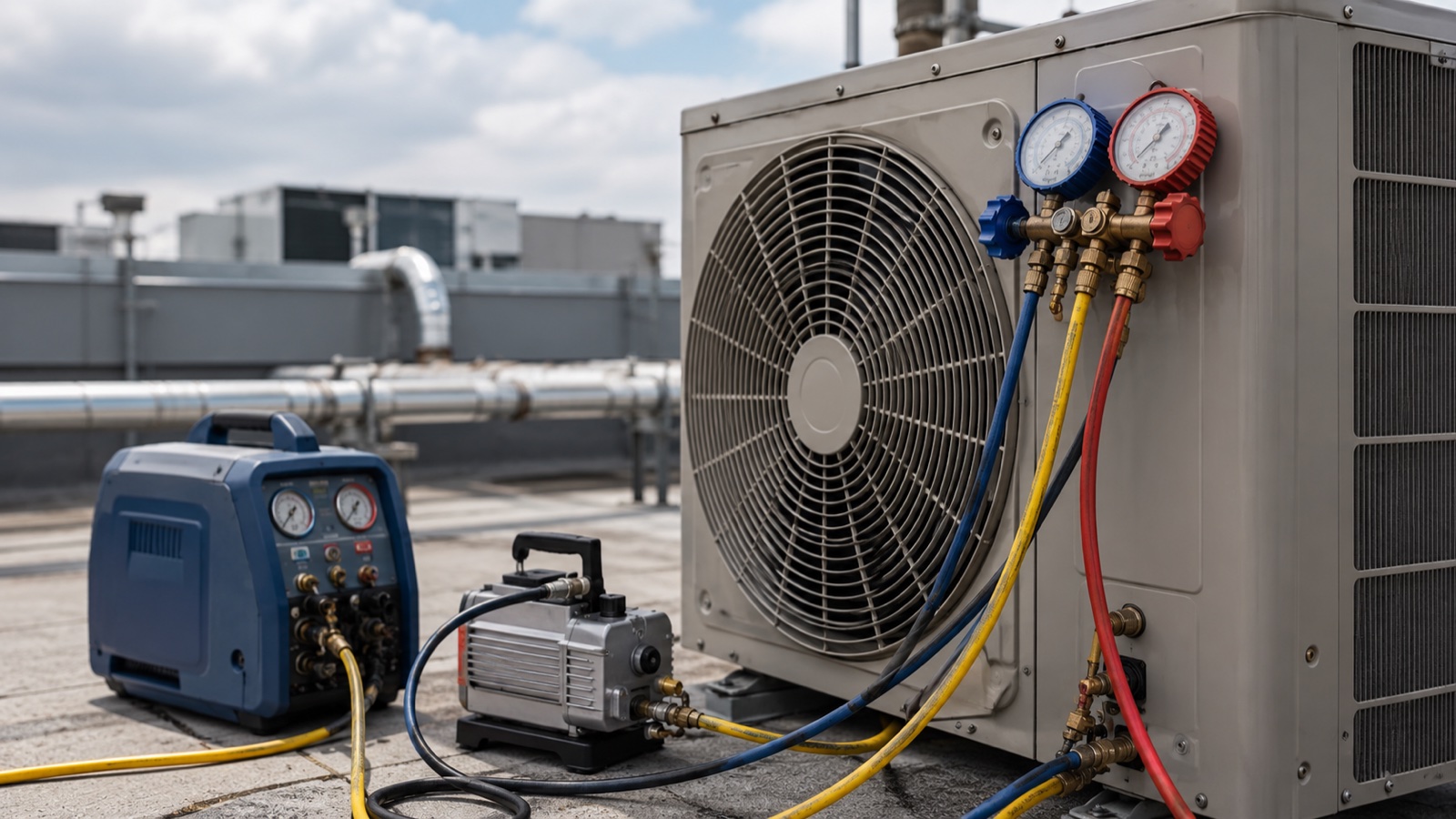
HVAC Technician's Tool Tracking Checklist
Your gauges need calibration, your recovery machine costs more than your first car, and half your tools are sitting in the shop waiting for heating season. Time to get organized.
HVAC is a trade where your tool needs change with the season. In the summer, your van is loaded with refrigerant gauges, vacuum pumps, and recovery machines. In the winter, it's combustion analyzers, manometers, and gas leak detectors. Spring and fall, it's a mix of both plus everything for maintenance season.
That seasonal rotation creates a tracking problem that most trades don't deal with. Tools sit idle for months at a time. You pull them out in October, realize the combustion analyzer hasn't been calibrated since last winter, and now you're scrambling. Or worse — you can't find it at all.
This guide is a complete checklist for HVAC technicians who want to track what they own, keep calibrations current, and stop losing tools in the seasonal shuffle.
What your toolkit is actually worth
HVAC technicians consistently underestimate their tool value. The typical guess is $5,000 to $8,000. The real number for a working residential/commercial tech is usually $8,000 to $20,000, and it climbs fast if you carry your own recovery equipment and diagnostic tools.
The reason is straightforward: HVAC tools are technical instruments, not just hand tools. A good set of digital manifold gauges costs $400 to $800. A vacuum pump is $300 to $700. A recovery machine is $1,000 to $3,000. A combustion analyzer is $500 to $2,000. These are precision instruments, and they're priced like it.
The complete HVAC tool checklist
Refrigerant tools — cooling season
- Digital manifold gauge set (Testo 557, Fieldpiece SM380V, Yellow Jacket) — $400–$800
- Analog manifold gauge set (backup) — $80–$200
- Refrigerant hoses (multiple sets, multiple lengths) — $50–$150
- Vacuum pump (Navac, JB Industries, Robinair) — $300–$700
- Micron gauge / vacuum gauge — $100–$300
- Refrigerant recovery machine (Appion, Yellow Jacket, Robinair) — $1,000–$3,000
- Refrigerant scale — $100–$300
- Refrigerant leak detector (electronic) — $150–$500
- UV leak detection kit — $30–$80
- Superheat/subcooling calculator (or built into digital gauges)
- Core removal tools — $30–$80
- Swaging / flaring tool set — $50–$200
- Nitrogen regulator and flow meter — $50–$150
- Torque wrench (for flare fittings) — $30–$80
Total for refrigerant tools: $2,400–$6,500
Your recovery machine alone might be worth more than many tradespeople's entire hand tool collection. An Appion G5Twin runs around $2,000 to $2,500. That's a single tool.
Combustion and gas tools — heating season
- Combustion analyzer (Testo 300, Bacharach Fyrite InTech, UEI) — $500–$2,000
- Manometer / digital pressure meter — $100–$400
- Gas leak detector (combustible gas) — $100–$400
- CO detector (personal safety) — $100–$300
- Draft gauge — $50–$150
- Gas pressure test kit — $30–$80
- Pipe thread sealant and fittings (consumables)
Total for combustion/gas tools: $900–$3,300
The combustion analyzer is the big one here. A Testo 300 LL runs around $1,500 to $2,000, and it requires annual calibration to give accurate readings. More on calibration below.
Electrical and diagnostic tools
- Digital multimeter (Fluke 117 or similar) — $150–$300
- Clamp meter (Fluke 325, Fieldpiece SC680) — $150–$350
- Non-contact voltage tester — $20–$40
- Capacitor tester — $50–$150
- Megohmmeter (for compressor testing) — $200–$600
- Thermocouple / temperature probes — $30–$100
- Psychrometer / hygrometer (wet bulb/dry bulb) — $100–$400
- Anemometer (for airflow measurement) — $100–$300
- Static pressure probes and tips — $30–$80
Total for electrical/diagnostic: $800–$2,300
Cordless tool platform
- Drill/driver — $100–$180
- Impact driver — $100–$200
- Reciprocating saw — $100–$200
- Right-angle drill — $150–$250
- Oscillating multi-tool — $100–$200
- Metal shears / nibbler — $100–$250
- Work light — $50–$150
- Batteries (4–6 at $80–$150 each) — $320–$900
- Charger(s) — $50–$100
Total for cordless platform: $1,100–$2,400
Hand tools
- Adjustable wrenches (multiple sizes) — $15–$40 each
- Hex key / Allen wrench sets (SAE and metric) — $15–$40
- Nut driver set — $30–$60
- Screwdriver set — $30–$100
- Ratchet and socket set — $50–$200
- Pipe cutter (copper) — $15–$60
- Tubing bender set — $30–$100
- Tin snips (left, right, straight) — $15–$40 each
- Sheet metal hand tools (hand seamers, crimpers) — $15–$40 each
- Tape measures — $15–$35 each
- Torpedo level — $20–$50
- Step bits — $20–$60
- Hole saws — $30–$100
Total for hand tools: $400–$1,000
Safety and work gear
- Safety glasses — $10–$30
- Gloves (multiple types) — $15–$40
- Headlamp — $25–$80
- Knee pads — $20–$60
- Tool bags / organizer systems — $50–$300
- Hard hat — $15–$60
- Hearing protection — $10–$30
Total: $150–$600
The running total
- Refrigerant tools: ~$4,000
- Combustion/gas tools: ~$1,800
- Electrical/diagnostic: ~$1,500
- Cordless platform: ~$1,700
- Hand tools: ~$700
- Safety/work gear: ~$350
Typical total: ~$10,000 for a residential tech, $15,000–$20,000+ for commercial or experienced technicians.
The calibration tracking problem
HVAC is one of the few trades where tool calibration isn't optional — it's critical for both accuracy and compliance.
Combustion analyzers need annual calibration. If your Testo or Bacharach hasn't been calibrated, your CO and efficiency readings might be off, and in some jurisdictions, your work could be questioned during inspections.
Refrigerant scales drift over time. A scale that's off by even a few ounces can mean improper charge, callbacks, and unhappy customers.
Micron gauges need periodic verification. If your vacuum gauge reads 300 microns when the actual level is 800, you're pulling incomplete vacuums and setting up systems for premature failure.
Digital manifold gauges should be zeroed regularly and calibrated periodically.
Tracking calibration dates alongside your tool inventory means you know when each instrument is due before the season hits. ToolTracked lets you add notes and dates to any item in your inventory — set your calibration dates when you log the tool, and you'll never start a season wondering whether your analyzer is still accurate.
EPA Section 608 and tool compliance
If you handle refrigerants, you're required to hold an EPA Section 608 certification. But beyond the certification itself, the tools you use for refrigerant recovery must meet specific requirements:
- Recovery machines must be certified to meet EPA standards for recovery efficiency
- You need a certified refrigerant scale for accurate charge measurement
- Leak detection equipment should meet current sensitivity standards
Keeping records of your recovery machine's certification, including model number and serial number, is part of being compliant. If an inspector asks, "What recovery machine do you use, and when was it last serviced?" you want an answer that doesn't start with "Uh..."
The seasonal storage trap
Here's the scenario that gets HVAC techs in trouble: heating season ends in April. You pull your combustion analyzer, manometer, and gas tools out of the van and put them... somewhere. The garage shelf. A bin in the shop. The spare bedroom closet.
Six months later, heating season starts again. Now you're tearing through the garage trying to find the Testo. It's in a case, but which case? Is it the one in the shop or the one under the workbench?
This happens every year to techs who don't track their tools by location. And every year, a percentage of those tools simply don't turn up — lost in the shuffle, left at a job site months ago, or quietly borrowed by a coworker and never returned.
The fix is simple but requires discipline: when you put tools into seasonal storage, record where they went. When you pull them out, verify the list. Treat the seasonal changeover like a mini-audit.
Theft risk for HVAC techs
HVAC vans are targets. Thieves know that a service van parked at a residential call or in an apartment complex parking lot is full of expensive, resaleable tools. Recovery machines, cordless tool platforms, and copper fittings all have street value.
A few things that help beyond basic security:
Document serial numbers on every tool over $100. Recovery machines, vacuum pumps, manifold gauges, cordless tools, meters — all have serial numbers. Photographing them takes seconds and makes police reports and insurance claims dramatically easier.
Know your per-item limits. If your inland marine policy caps at $2,500 per item and your recovery machine cost $2,800, you're eating that $300 difference unless you've scheduled it separately.
Cover seasonal tools year-round. Just because your combustion analyzer is sitting in your garage doesn't mean it's not at risk. Make sure your policy covers tools at all locations, not just in the vehicle.
Build your checklist now
Don't wait for the seasonal changeover to start tracking. The best approach:
- Inventory everything currently in your van — this is your active working set
- Walk through your shop or garage and document stored seasonal tools
- Record serial numbers on instruments and power tools
- Note calibration due dates on analyzers, scales, and gauges
- Update the list at every seasonal changeover
ToolTracked identifies HVAC equipment from Testo, Fieldpiece, Fluke, Yellow Jacket, Appion, Milwaukee, and hundreds more — just point your camera and snap. Add calibration dates, track seasonal storage locations, and generate insurance reports in minutes. Free for up to 20 tools. Download ToolTracked →