Depreciation Guide for Contractor Tools and Equipment
Your $500 drill isn't worth $500 forever — but what it's worth depends on who's asking. Here's how depreciation works for taxes and insurance, and why the numbers are completely different.
Depreciation is one of those topics that makes contractors' eyes glaze over. It sounds like an accounting problem, not a job site problem. But depreciation directly affects two things every contractor cares about: how much you owe in taxes and how much your insurance pays out if something happens to your tools.
The catch is that those two calculations work differently. The IRS has its own depreciation rules for tax deductions. Your insurance company has a separate set of rules for determining what your tools are actually worth. Understanding both keeps you from leaving money on the table in either direction.
Note: This is general information about depreciation concepts. Tax laws change frequently, and your specific situation may vary. Consult a qualified tax professional before making decisions based on this information.
What Depreciation Actually Means
Depreciation is the formal recognition that things lose value over time. A brand-new $2,000 miter saw isn't worth $2,000 after three years of daily use. The IRS lets you deduct that loss in value as a business expense. Your insurance company accounts for that loss in value when calculating claims.
But the rate at which things "lose value" is defined differently depending on who's doing the math. The IRS uses fixed schedules designed to incentivize business investment. Insurance companies use market-based assessments of what used tools actually sell for. These rarely line up.
IRS Depreciation: MACRS
The IRS uses the Modified Accelerated Cost Recovery System (MACRS) as the default method for depreciating business assets. MACRS assigns every type of asset a "recovery period" — the number of years over which you spread the deduction.
For contractors, the most common categories are:
3-year property. Some specialized small tools and certain research equipment. This category is narrower than most contractors assume — most tools don't qualify for three-year depreciation.
5-year property. Cars, light trucks, vans, computers, copiers, and some technological equipment. Your work truck is a 5-year asset under MACRS. So are laptops, tablets, and other tech you use for estimating, project management, or communication.
7-year property. Office furniture, fixtures, and most machinery and equipment that doesn't fit neatly into another category. The majority of contractor tools and equipment — table saws, compressors, generators, scaffolding, lifts — fall into this bucket.
15-year property. Land improvements like fencing, parking lots, and landscaping (relevant if you own your shop property).
MACRS uses a declining balance method that front-loads deductions. In the first year of a 7-year asset, you don't deduct 1/7 of the cost — you deduct more. The percentages are fixed in IRS tables, and your tax preparer applies them automatically. The net effect is that you get larger deductions in the early years, which is generally advantageous.
Section 179: Skip the Schedule Entirely
Section 179 lets you bypass depreciation schedules and deduct the full cost of qualifying equipment in the year you buy it. For most independent contractors, this is the preferred approach because it maximizes your deduction immediately rather than spreading it over years.
The annual deduction limit is high enough that most contractors will never hit it. The key requirements:
- The equipment must be used more than 50% for business
- It must be purchased and placed in service in the same tax year
- Your total equipment purchases can't exceed the investment limit (which is well into seven figures for most tax years)
Section 179 is especially useful for contractors who have a strong income year and want to offset it with equipment purchases. Buy a new truck and a trailer full of tools in December, and you can potentially deduct the entire cost against that year's income.
Bonus Depreciation
Bonus depreciation works alongside MACRS and allows an additional first-year deduction on qualifying assets. The percentage has changed over the years — it's been as high as 100% — so the current rate matters for your planning.
When bonus depreciation is high, it functions almost like Section 179 by letting you write off most or all of an asset in year one. The main difference is in the technical requirements and limitations. Your tax professional can determine which approach — Section 179, bonus depreciation, or standard MACRS — produces the best result for your specific situation in any given year.
Tax Depreciation vs. Actual Market Value
Here's where it gets important for contractors to understand the distinction. The IRS depreciation schedule has nothing to do with what your tools are actually worth on the used market.
Consider a real example:
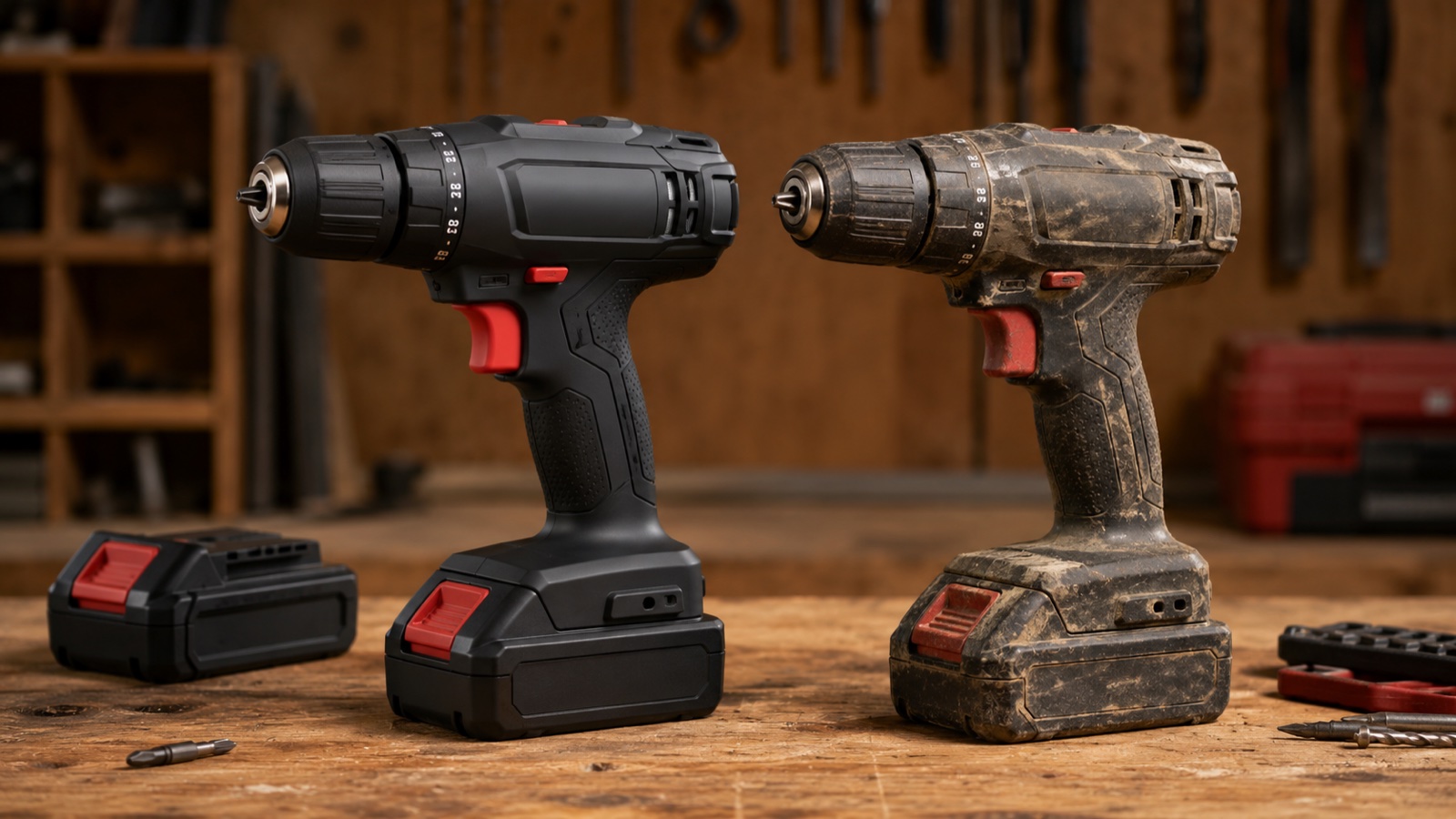
A $500 cordless hammer drill, purchased new.
Under MACRS (7-year property), after three years the IRS says you've depreciated roughly 60-65% of the cost. For tax purposes, the "book value" is around $175-$200.
On the used market, that same drill in good working condition might sell for $250-$350. Contractors buy and sell used tools all the time, and a quality cordless drill that works fine holds its value better than the IRS schedule suggests.
For insurance purposes, the story is different again. If you have replacement cost coverage, the insurer doesn't care about depreciation at all — they pay what it costs to buy a new equivalent tool, which might be $549 if prices have gone up.
If you have actual cash value coverage, the insurer calculates depreciation based on the tool's age, condition, and remaining useful life. Their depreciation rate might differ from the IRS schedule, and they'll assess each item individually.
Three different numbers — tax book value, market value, and insurance value — for the same drill.
Practical Examples: What Tools Are Worth Over Time
To make this concrete, here's how depreciation plays out for common contractor tools across different contexts.
Example 1: A $2,400 table saw
| Year | Tax Book Value (MACRS 7-yr) | Approximate Market Value | Insurance Replacement Cost |
|---|---|---|---|
| New | $2,400 | $2,400 | $2,400 |
| Year 2 | ~$1,740 | ~$1,900 | $2,500 (price increased) |
| Year 4 | ~$840 | ~$1,400 | $2,600 |
| Year 7 | ~$0 | ~$800 | $2,700 |
Notice that the tax value hits zero but the saw still has significant market value and replacement cost. This is normal and expected.
Example 2: A $500 cordless drill kit
| Year | Tax Book Value (MACRS 7-yr) | Approximate Market Value | Insurance Replacement Cost |
|---|---|---|---|
| New | $500 | $500 | $500 |
| Year 2 | ~$360 | ~$350 | $530 |
| Year 3 | ~$250 | ~$275 | $549 |
| Year 5 | ~$115 | ~$150 | $579 |
Power tools depreciate faster in market value than stationary equipment because technology advances, battery platforms evolve, and wear is more visible.
Example 3: A $45,000 work truck
| Year | Tax Book Value (MACRS 5-yr) | Approximate Market Value | Insurance Value |
|---|---|---|---|
| New | $45,000 | $45,000 | $45,000 |
| Year 2 | ~$27,000 | ~$37,000 | ~$37,000 |
| Year 3 | ~$16,200 | ~$32,000 | ~$32,000 |
| Year 5 | ~$0 | ~$24,000 | ~$24,000 |
Vehicles depreciate aggressively for tax purposes but hold substantial real-world value, especially trucks in the contractor market.
Why This Matters for Your Tool Inventory
Understanding depreciation in both contexts means maintaining two sets of values for your tools:
For tax purposes: Track purchase prices, purchase dates, and which depreciation method you used (Section 179, bonus, or MACRS). Your tax preparer needs this history, especially for tools you sell, trade, or dispose of — because if you deducted the full cost via Section 179 and then sell the tool later, the sale proceeds might be taxable income.
For insurance purposes: Track current replacement values, updated annually. This ensures your coverage limits match what it would actually cost to replace your tools if you lost them. Being underinsured because your inventory still shows 2022 prices is an expensive mistake.
An app like ToolTracked can hold both numbers for each tool — what you paid and what it costs to replace — so your inventory serves both your tax preparer and your insurance agent without maintaining separate spreadsheets.
Disposal, Sale, and Trade-In
When you get rid of a tool, depreciation doesn't just stop — there are tax implications.
If you sell a tool for more than its current tax book value, the profit may be taxable as depreciation recapture. If you fully depreciated a saw (book value: $0) and sell it for $600, that $600 could be taxable income.
If you trade in a tool, the transaction may qualify for like-kind exchange treatment depending on the circumstances and current tax law.
If a tool breaks and you throw it away, you can potentially write off the remaining book value as a loss.
Keep records of how tools leave your inventory, not just how they enter it. Your tax preparer needs this information to handle depreciation correctly.
Keeping It Simple
Depreciation sounds complicated, but for most independent contractors, the practical approach is straightforward:
- Buy a tool. Record the date, cost, and what it is.
- Deduct it. Use Section 179 for most purchases under the annual limit. Let your tax preparer handle the details.
- Insure it. List it at current replacement value on your inventory.
- Update annually. Adjust replacement values each year and add new purchases.
- Record disposals. When a tool leaves your inventory, note how and why.
You don't need to calculate MACRS percentages yourself. That's what tax software and tax professionals are for. What you do need is accurate purchase records and a current inventory — the raw data that makes everything else work.
Track purchase costs and replacement values for every tool in one place. ToolTracked helps you maintain the documentation your tax preparer and insurance company both need — with AI photo recognition that makes cataloging fast and painless.